
“It is in war that the State really comes into its own: swelling in power, in number, in pride, in absolute dominion over the economy and the society.” – Murray Rothbard
The Anti-War Heart of Metal: A Deep Dive into the Classics and the Case for Metal’s Renewed Anti-War Voice
Metal, with its thunderous riffs, unrelenting rhythms, and raw emotional intensity, has long served as a megaphone for dissent. Among one of its most potent themes is a searing critique of war, exposing its futility and human toll. Three songs that exemplify this—Black Sabbath’s War Pigs (1970), Metallica’s One (1988), and Megadeth’s Peace Sells (1986)—stand as pillars of metal’s anti-war legacy. These tracks, born from distinct eras and perspectives, channel rage against the architects of conflict, the suffering of its victims, and the societal disinterest that sustains it. In 2025, as global conflicts rage and the military industrial complex keeps its wheels turning, metal must revive and amplify its anti-war sentiments to confront a world on the edge of total chaos.
War Pigs: A Condemnation of War’s Designer
Black Sabbath’s War Pigs, from their 1970 album Paranoid, is a metaphorical stick of dynamite tossed at the elites who orchestrate wars to feed the blood-soaked and blood-thirsty State for power and profit. Written during the height of the Vietnam War, the song captures the era’s disillusionment with military overreach and the draft, which is slavery. Originally titled “Walpurgis”, a nod to a witches’ sabbath, later changed to avoid religious backlash, the song’s lyrics are a scathing indictment of those who pull the strings of war and encourage it. All the while they are shielding themselves from its consequences. Think a Lindsey Graham, John Bolton, or Hillary Clinton type figure.
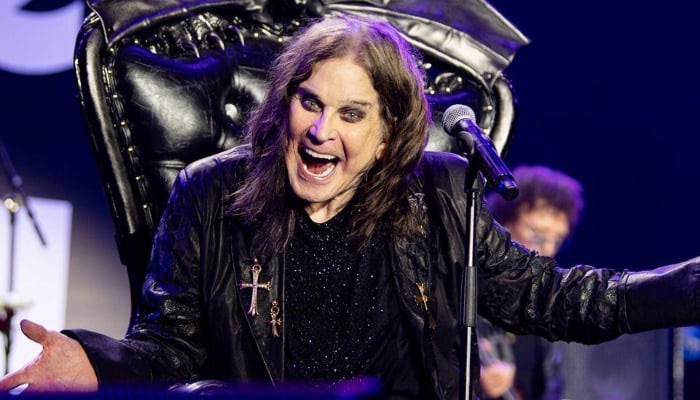
Ozzy Osbourne’s haunting wail, paired with Tony Iommi’s almost dirge-like riffs and Geezer Butler’s apocalyptic basslines, creates a soundscape of dread. The opening lines set the tone: “Generals gathered in their masses / Just like witches at black masses.” The imagery of generals as sorcerers conjuring death is no accident. Butler, the song’s primary lyricist, drew inspiration from his Catholic upbringing and the stark class divides of post-war Birmingham, England. The song’s most damning verse: “Politicians hide themselves away / They only started the war / Why should they go out to fight? / They leave that role to the poor”—exposes the cowardice and hypocrisy of leaders who sacrifice the vulnerable for their own gain. Chicken-hawks of a feather flock together.
War Pigs doesn’t merely condemn war; it frames it as a moral failing of the powerful, culminating in a vision of divine judgment: “Satan laughing spreads his wings.” This apocalyptic tone resonates beyond Vietnam, speaking to any conflict driven by greed or ideology—whether the Iraq War, the Syrian civil war, the wars in the Balkans, or for the ongoing tensions in Ukraine and Gaza. Its universal appeal lies in its unrelenting focus on systemic injustice, making it a timeless anthem for the disenfranchised.
One: The Personal Horror of War
Metallica’s One, from their 1988 album …And Justice for All, shifts the lens from systemic corruption to the individual devastation of war. Inspired by Dalton Trumbo’s 1939 anti-war novel Johnny Got His Gun, the song tells the story of a World War I soldier who steps on a landmine, losing his limbs, sight, hearing, and speech. Trapped in his own mind, he is a living corpse, unable to communicate or escape his suffering. The song’s structure mirrors this descent: Kirk Hammett’s delicate, clean intro lulls the listener into a false sense of calm before James Hetfield’s frantic vocals and Lars Ulrich’s punishing drums explode into a thrash metal onslaught.
The lyrics, written by Hetfield, perfect empathy and horror: “Darkness imprisoning me / All that I see, absolute horror / I cannot live, I cannot die / Trapped in myself, body my holding cell.” These lyrics are directly from Trumbo’s novel, which recounts a soldier’s futile attempts to signal for death via Morse code, One forces listeners to inhabit the soldier’s nightmare. The song’s 1989 music video, Metallica’s first, combines your typical band music video footage with clips from the 1971 film adaptation of Johnny Got His Gun, really putting into focus its emotional weight. One stands apart for its refusal to glorify war. While many war narratives celebrate heroism, Metallica strips away the mythos, exposing the physical and psychological toll on soldiers. Its historical context—World War I, at the time, the worst mass murder campaign to have ever happened in human history, with its trench warfare and unprecedented casualties—grounds the song in a specific moment, but its themes are universal. The soldier’s isolation mirrors the trauma of veterans from Vietnam to Afghanistan, many of whom struggle with PTSD and seemingly no support. In 2025, as drone warfare and cyberattacks make conflict more impersonal, One remains a vital reminder of the human beings—soldiers, civilians, refugees—reduced to collateral damage and further dehumanized as nothing more than the “consequences of war.”
Peace Sells: A Cynical Jab at the War Machine
Megadeth’s Peace Sells, the title track from their 1986 album Peace Sells… But Who’s Buying?, offers a more cynical take on the military-industrial complex and the societal acceptance or apathy that fuels it. Written by Dave Mustaine, the song reflects the Cold War’s paranoia, with the perpetual threat of nuclear annihilation. Mustaine’s lyrics, deep in sarcasm, mock those who blindly conform to a system that prioritizes war over peace: “What do you mean, ‘I don’t believe in God’? / I talk to him every day / What do you mean, ‘I don’t support your system’? / I go to court when I have to.” And of course the iconic: “Peace sells, but who’s buying?” acting as both a challenge and a lament, questioning why peace is treated as an unsellable commodity in a world addicted to conflict.
Mustaine’s sneering delivery and intricate guitar work channel the frustration of a generation caught between Reagan-era militarism and economic stagnation. Peace Sells critiques not just war but the cultural and economic structures that are needed to sustain it: defense contractors, media fearmongering, and public apathy. Its relevance endures in an era where global military spending topped $2.24 trillion in 2022, while we are so deeply in debt and are suffering such a crippling deficit too.
Mustaine’s personal context adds depth to the song. A former Metallica member, he channeled his outsider status and distrust of authority into Megadeth’s music, making Peace Sells a middle finger to the establishment. The song’s critique of blind patriotism and consumerism resonates in 2025, as nations rally behind nationalist rhetoric while ignoring the root causes of conflict.
The Case for Metal’s Anti-War Revival
The anti-war messages of War Pigs, One, and Peace Sells are not frozen in their respective eras, they are exceedingly relevant. It is 2025 and the world grapples with ongoing conflicts in Ukraine, Gaza, and potentially even Iran, alongside rising tensions in the Indo-Pacific. The U.S. defense budget for 2024 was a stunning and appalling $816 billion. Technologies like drones and AI-driven warfare have made violence more abstract, distancing civilians from its human cost. Metal, with its unfiltered rage and emotional depth, is uniquely equipped to pierce this veil of detachment.
Metal’s history of anti-war activism is rich but not exactly linear. Beyond the songs discussed, bands like Iron Maiden (Aces High, Two Minutes to Midnight), System of a Down (B.Y.O.B., Hypnotize), and Lamb of God (Ashes of the Wake) have tackled war’s horrors, often blending personal and political perspectives. We have even seen the Slam genre tackle war themes. Torture, for example, wrote the album: 4. Enduring Freedom in 2023. While the lyrics aren’t intelligible because it is a slam project, it excoriates the War on Terror. I want the anti-war sentiments to have its thumb in so many metal subgenre pies. Unfortunately, the genre has sometimes leaned into escapism, horror, or party anthems—diluting its social commentary. Today, metal must reclaim its role as a voice for the marginalized, channeling its aggression into critiques of militarism and imperialism.
Metal’s outsider ethos gives it credibility to challenge authority. Metal thrives on provocation. Its DIY roots, underground shows, fan-driven communities—make it a grassroots force for dissent. A modern War Pigs could rail against the profiteering of defense contractors like Lockheed Martin, whose stocks have soared during recent conflicts. A new One could explore the plight of refugees, with millions displaced because of these conflicts. A modern Peace Sells could mock the hypocrisy of politicians who preach peace while funding arms races.
War Pigs, One, and Peace Sells are more than songs, they are battle cries against war’s greed, horror, and absurdity. Black Sabbath exposed the elites who profit from conflict; Metallica humanized its victims; Megadeth mocked the systems that perpetuate it. Together, they form a blueprint for metal’s anti-war potential. In 2025, as wars rage and militarism grows, it would be supremely useful for metal to revive this legacy. By channeling its fury into anthems that confront drone warfare, refugee crises, and defense profiteering, the genre can honor its roots and inspire resistance. Metal’s power lies in its refusal to stay silent—it’s time to end the empire, bring our boys home, and embrace what Ron Paul says: “Setting a good example is a far better way to spread ideals than through force of arms.”


 The Alternative Sovereign
Leave a comment